Why a Messi vs Ronaldo World Cup Final Feels So Far Away
FilmiTalk Take
Portugal's slip against Colombia has made the most anticipated match in football history significantly harder to arrange, and for a generation of South Asian fans who grew up choosing sides between these two legends, the stakes of every remaining match just got very personal.
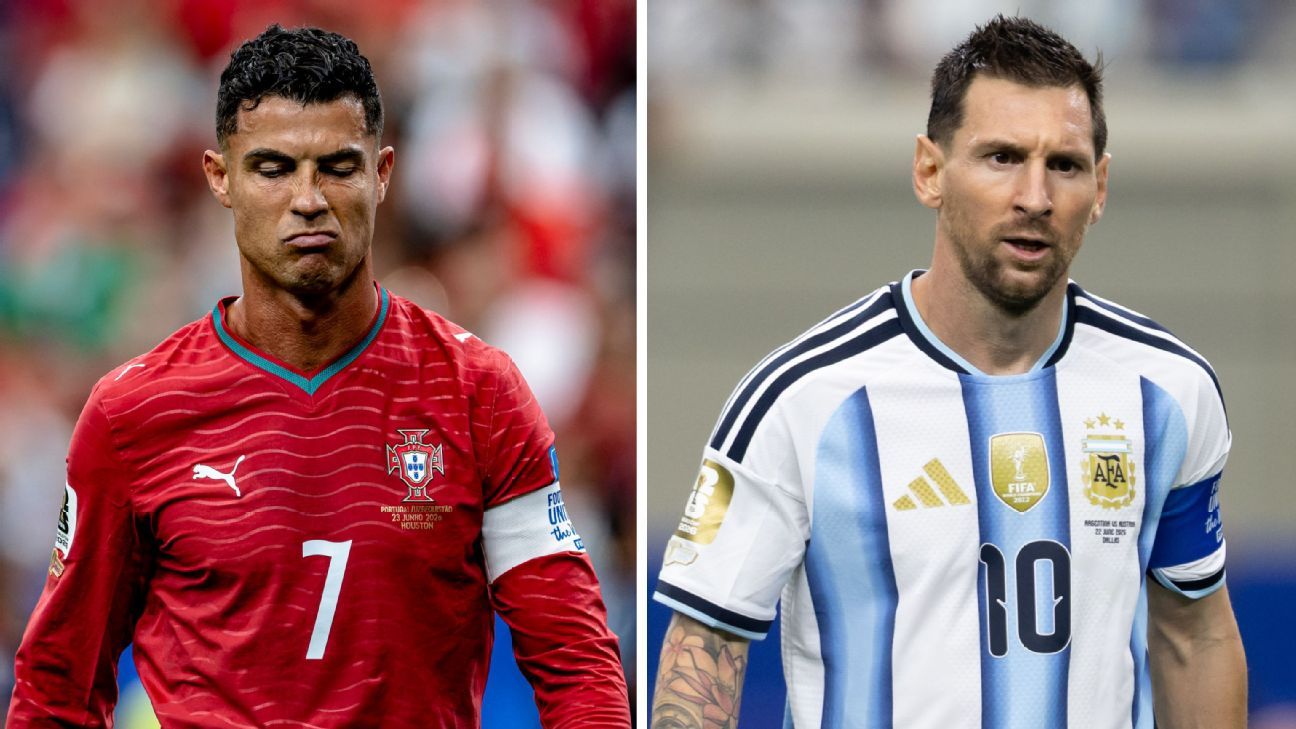
Football has given us many gifts over the years, but few conversations have consumed more dinner tables, WhatsApp group chats and office debates across South Asia and its diaspora than this one: will Messi and Ronaldo ever meet at a World Cup? For a brief, electric moment, the bracket mathematics were pointing toward a quarterfinal collision. Then Portugal dropped points against Colombia, and just like that, the dream got complicated.
The draw means the path to a Messi-Ronaldo quarterfinal has been effectively closed off, at least according to how the bracket is now shaping up. If both players and their nations continue to progress, the earliest they could conceivably meet is the final itself. That is either the most romantic outcome football could produce or the cruelest tease, depending on how the next few weeks unfold.
For the generation of fans who grew up watching these two redefine what a footballer could be, this tournament carries enormous emotional weight. In cities like Lahore, Mumbai, Birmingham, Toronto and Sydney, millions of supporters have essentially split into two churches for the better part of two decades. The Messi faithful and the Ronaldo devotees have argued across every format imaginable. A World Cup final between Argentina and Portugal would be the ultimate settling of that debate, or perhaps proof that the debate was never really meant to be settled.
What makes Portugal’s dropped points sting even more is the timing. Ronaldo is not getting younger, and neither is Messi. This World Cup in 2026 may genuinely be the final chapter for both of them on the biggest stage. Fans know it. The players almost certainly know it. Every match they play now carries a quiet sense of finality that earlier tournaments simply did not have. A quarterfinal meeting would have felt like a gift. A final meeting would feel like something almost scripted by destiny.
The tournament itself is still wide open, and both Argentina and Portugal remain serious contenders with plenty of football still to play. But football has a habit of writing its own story, and it does not always follow the narrative arc that fans demand. Colombia’s resilience against Portugal is a reminder that no result at this level is ever guaranteed, and that the bracket can shift in ways that reward the unexpected rather than the anticipated.
Across social media, reactions have ranged from genuine disappointment to cautious optimism that the final remains on the table. South Asian football communities, where the Messi-Ronaldo rivalry has arguably been debated more passionately than anywhere else in the world, have been vocal about what this development means. For fans who stayed up through the night to watch, who painted their walls and named their pets after these players, the idea of a final between these two nations would be nothing short of a cultural event.
The road to that final is long, brutal and filled with teams that will not cooperate with anyone’s storybook ending. But football has surprised us before. So here is the question worth sitting with as the tournament continues to unfold: if Messi and Ronaldo do somehow meet in the final, would that be the greatest moment in World Cup history, or would the weight of expectation make it impossible to live up to the dream?