Argentina Prove They Can Cope Without Messi — Almost
FilmiTalk Take
Argentina flashed real squad depth against Jordan, but Messi coming off the bench to score again proves the world is not done watching him rewrite records — and neither is he.
There is a question that has haunted Argentine football for years, whispered at family gatherings from Buenos Aires to Birmingham, debated in WhatsApp groups from Karachi to Melbourne — what happens when Messi is no longer there? Well, Argentina just gave the world a partial answer, and it is both reassuring and deeply telling at the same time.
Against Jordan, the Albiceleste showed they have the squad depth and tactical structure to function without their captain from the first whistle. That is genuinely significant for a team that has, for the better part of two decades, built its entire identity around one extraordinary human being. Other players stepped up, the system held, and Argentina did what Argentina needed to do. For a nation carrying the weight of defending its World Cup crown, that kind of collective performance matters enormously.
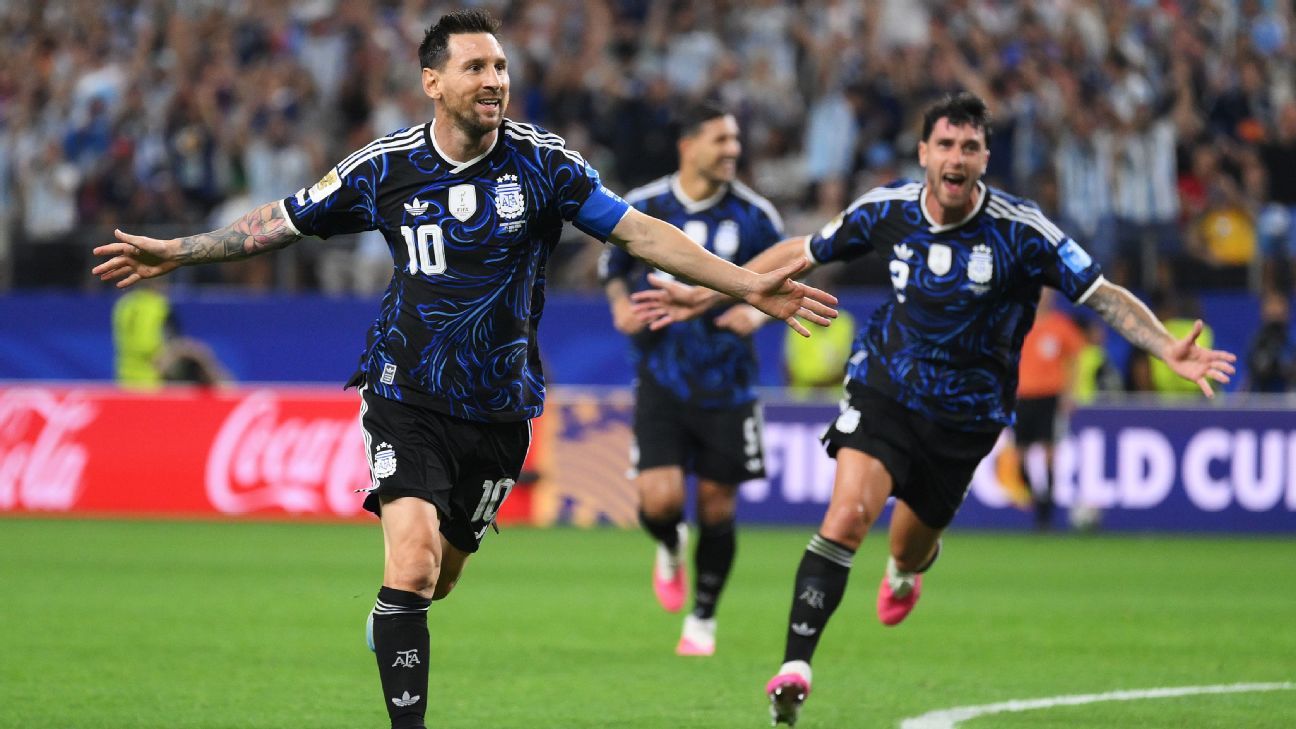
But then Messi came off the bench. And of course he scored. Of course he extended his own goal-scoring record. Because that is simply what Lionel Messi does — he makes every argument about his irrelevance completely irrelevant. At 38 years old, coming on as a substitute and still finding the net, he is not just defying football logic, he is defying time itself. South Asian football fans, who have grown up watching Messi with the same reverence reserved for cinema legends, will find something deeply poetic in that.
For the Argentine diaspora watching from stadiums, living rooms and chai spots across the UK, USA, Canada and Australia, this match carried layered meaning. The 2022 World Cup triumph in Qatar was a cathartic, generational moment — the title Messi and Argentina had been chasing forever. Defending that crown is a different kind of pressure. It requires the team to evolve beyond a one-man narrative, and against Jordan, there were glimpses that this squad might actually be ready to do that. Glimpses, not guarantees.
The broader tournament picture is what makes this interesting. Every serious World Cup contender needs options, needs players who can carry the load when the superstar is rested or unavailable. Argentina’s depth has grown considerably, and the coaching setup appears to trust the collective. But the moment Messi walked on and immediately influenced the game, it underlined the uncomfortable truth — depth is one thing, but there is still no one on this planet quite like him.
Culturally, Messi occupies a space in global football that goes far beyond statistics. In South Asian households, he sits alongside the greats of Bollywood and cricket as a figure who transcends sport and becomes something closer to mythology. Every goal at this stage of his career feels like a bonus, a gift from a player who probably should have hung up his boots by now but simply refuses to stop being brilliant. The fact that he can do it as a substitute, at 38, in a World Cup campaign, only adds to the legend.
Argentina look capable, deep and dangerous. But the biggest question this match raises is one nobody quite has the answer to yet — when the tournament truly heats up and the margins shrink, will Argentina’s collective be enough, or will everything still ultimately run through Messi? What do you think — can Argentina actually win this World Cup without relying on Messi every single minute?