Koeman’s Anti-Football Gamble Blows Up for Netherlands
FilmiTalk Take
Koeman's cautious setup was always a risk with a squad carrying Dutch football's attacking legacy — Monday showed that playing against your own identity at a World Cup rarely ends well.
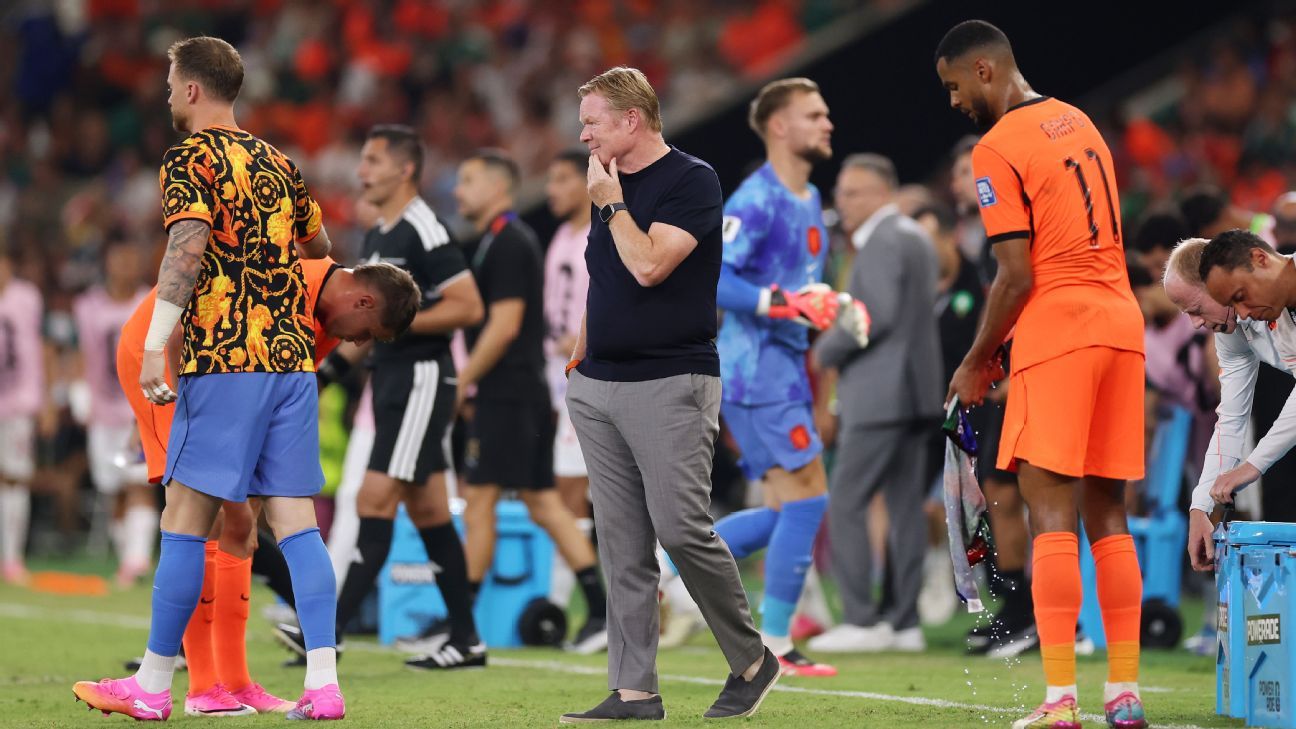
There are moments in football when a coach’s philosophy is not just questioned — it is publicly dismantled, on the biggest stage, in front of the world. For Ronald Koeman and the Netherlands, Monday delivered exactly that kind of reckoning.
Koeman has long been a polarising figure in Dutch football. Here is a man who played for one of the most romantically attacking sides in football history — the legendary Ajax and Barcelona teams of the late 1980s and early 1990s — yet chose to organise his Netherlands side in a way that seemed to drain every drop of that legacy. Total Football. The Dutch Masters. Cruyff’s shadow. None of that appears to have found its way into the tactical blueprint Koeman brought to this tournament.
Anti-football is a loaded term, but when it is used to describe a Netherlands team, it lands differently. This is a country that essentially gave the world a footballing religion. Dutch fans, whether they are watching in Amsterdam, in Sydney’s Leichhardt or in the South Asian diaspora communities of Leicester and Toronto who adopted the Oranje as a second team through decades of World Cup memories, carry a specific expectation when that orange shirt appears. They expect flair. They expect courage. They expect the ball to be played forward with conviction. What they got on Monday was something else entirely.
The approach backfired spectacularly. When you set up a team to absorb and contain rather than to express and attack, you are placing enormous trust in defensive discipline holding for the full ninety minutes. One moment of quality from the opposition, one lapse in concentration, and the entire structure unravels. Against a side with the quality and creativity to punish negativity, the Netherlands found themselves exposed in the worst possible way.
For the South Asian football community, the Netherlands has always carried a certain romanticism. Pakistani and Indian fans who grew up watching the World Cups of the 1990s and 2000s will remember watching Bergkamp, Van Nistelrooy, Robben and Sneijder with genuine joy. There are millions across the diaspora in the UK, Canada, the UAE and Australia who follow Dutch football precisely because of that attacking identity. Seeing it abandoned for a conservative setup feels like a betrayal of something deeper than just tactics.
There is also a broader tournament conversation here. The FIFA World Cup 2026 is the largest in history with its expanded format, and teams can no longer afford strategic miscalculations. The stakes are higher, the competition is fiercer, and a coach who misreads the moment can find his tournament unravelling before it has properly begun. Koeman now faces enormous pressure to recalibrate, to trust the attacking talent available to him, and to reconnect this Netherlands side with the identity that made them one of world football’s most beloved teams.
The Dutch have the players to be genuinely dangerous. Whether Koeman has the courage to unleash them is the real question hanging over this campaign now.
Can Koeman rediscover his Dutch identity before it is too late, or has this tournament already exposed a fundamental flaw in his vision for the Netherlands?