England Look Sharp on Paper But Blunt Where It Counts
FilmiTalk Take
England's inability to convert dominance into goals is a tournament-level problem, not just a one-off blip — and for millions of passionate fans across the diaspora, the Kane question may define how far the Three Lions actually go in 2026.
There is nothing more frustrating in football than a team that does everything right except score — and right now, that is the England story heading into the 2026 World Cup.
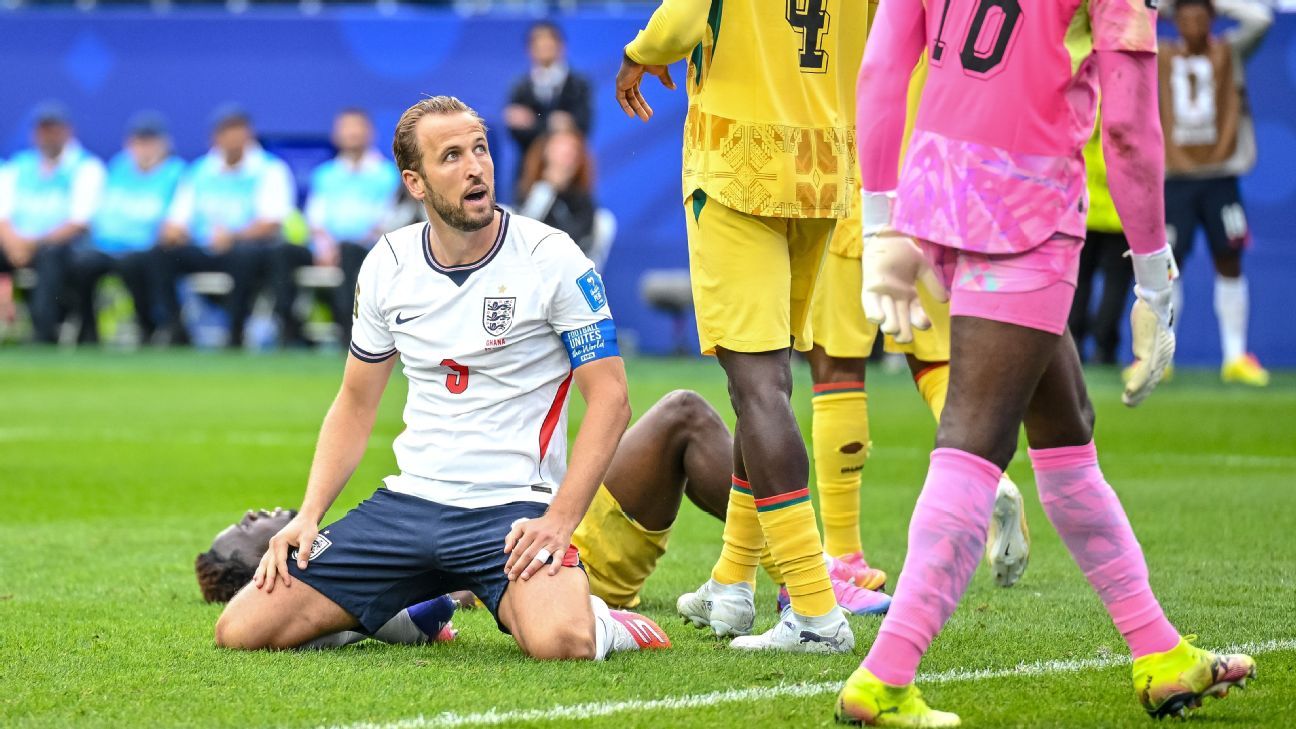
Against Ghana, England had the lion’s share of possession, fired off more shots, and strung together more passes than their opponents. On a stats sheet, it looked comfortable. On the scoreboard, it told a different story. The goals simply did not come. And in tournament football, where margins are razor-thin and knockout rounds show no mercy, a dominant performance that ends goalless is not a moral victory — it is a warning sign.
The concern around Harry Kane is the sharpest edge of this anxiety. Kane is England’s record scorer, the man the entire attacking system is built around, and yet there are visible signs that something is not clicking. When a striker of his calibre looks isolated or out of rhythm, it rarely fixes itself overnight. Supporters have seen this before — England sides that looked tidy in build-up play but lacked the clinical ruthlessness needed when the pressure actually arrives. At a World Cup, you cannot afford to look lost in front of goal.
For the South Asian diaspora that follows England with enormous passion — whether in Birmingham, Bradford, Toronto, Melbourne or across Pakistan and India — this is a familiar kind of heartbreak. Supporting England means learning to live with the gap between expectation and delivery. The Three Lions carry the weight of 1966 everywhere they go, and every tournament feels like the one where it might finally change. That emotional investment makes performances like the Ghana match sting even more. The football was there. The result was not.
The bigger World Cup picture matters here too. The 2026 tournament, co-hosted across the United States, Canada and Mexico, is an expanded 48-team event, which means more games, more fatigue, and more opponents who will set up defensively and dare England to break them down. If Kane and the attack cannot find their rhythm against Ghana in a pre-tournament setting, the prospect of facing compact, well-organised World Cup defences makes the worry entirely legitimate. Group stage games at this level can turn on a single moment of clinical finishing — and right now, England look like they might be leaving those moments on the training pitch.
Of course, pre-tournament friendlies and warm-up matches only tell part of the story. Squads find their shape, strikers rediscover their touch, and tournament football has a habit of producing unexpected heroes. England have the squad depth and the tactical quality to compete deep into the competition. But the pattern of controlling matches without converting is exactly the kind of bad habit that follows teams through tournaments if it is not addressed quickly.
The clock is ticking, and the football world is watching. Can Kane rediscover the form that makes him one of the most feared forwards of his generation — or will England’s World Cup dreams once again unravel in the most statistically baffling way possible?