Christian Pulisic and the Unlikely Heroes of USA 2026
FilmiTalk Take
The 2026 U.S. World Cup story is already reaching beyond the pitch into everyday American life — and that's exactly what makes a host nation's tournament run feel genuinely historic rather than just athletic.
Every great World Cup run has a cast of characters that extends far beyond the starting eleven — and the United States men’s national team at FIFA World Cup 2026 appears to be writing exactly that kind of story.
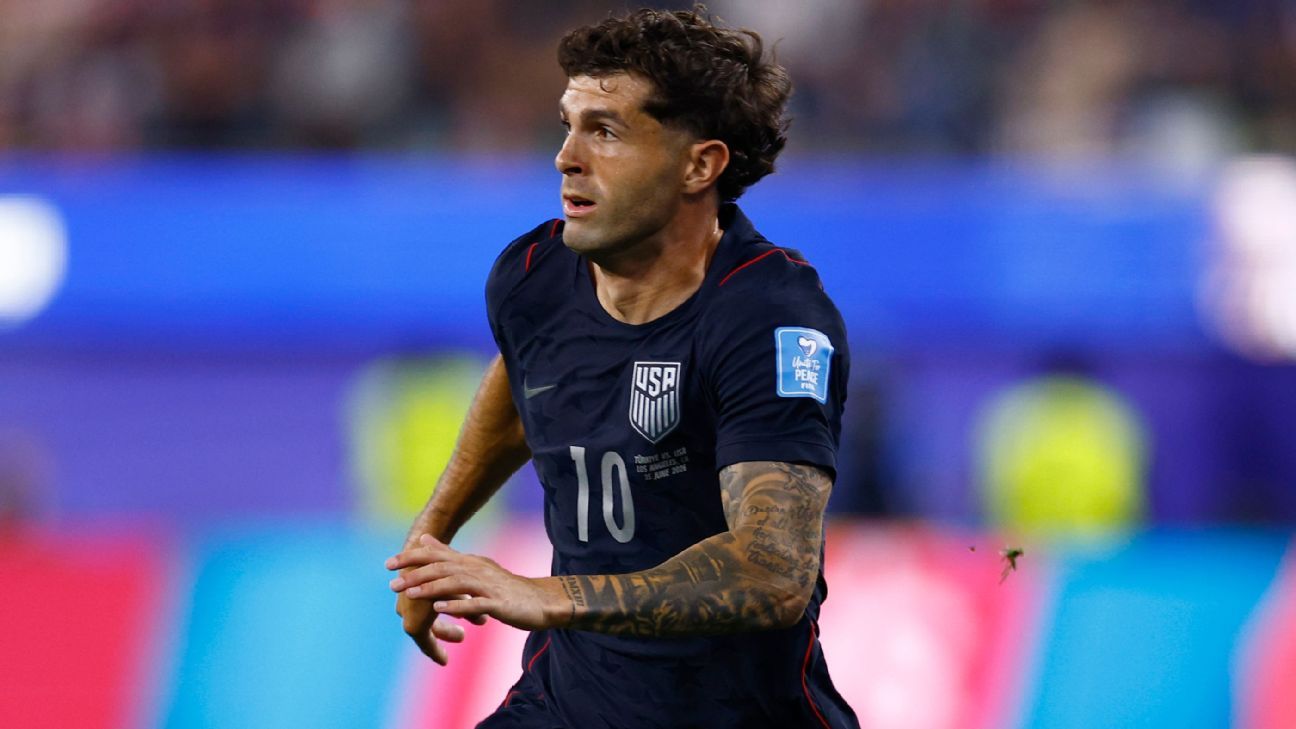
Christian Pulisic has long been the face of American football’s coming-of-age moment. The AC Milan attacker carries the weight of a nation’s footballing ambitions every time he pulls on that red, white and blue shirt. But what makes a World Cup truly memorable isn’t just the stars on the pitch — it’s the ecosystem of people, moments and coincidences that orbit around them. And apparently, that orbit now includes a golf cart dealership owner from Dana Point, California.
The mere fact that someone like Cole Schamber — a businessman from a coastal California town, not a footballer, not a pundit, not a federation official — is being woven into the fabric of the U.S. World Cup narrative says something profound about how this tournament captures ordinary life. The World Cup has always had this magic. It pulls in bakers from Buenos Aires, taxi drivers from Dakar, and yes, golf cart dealers from Southern California. That’s the tournament’s greatest gift to world culture.
For the South Asian diaspora in the USA, Canada, the UK and Australia, this resonates deeply. Many in these communities came to football sideways — through satellite dishes picking up European leagues, through WhatsApp groups debating Messi versus Ronaldo, through kids who grew up playing in suburban parks and suddenly found themselves glued to a host nation’s World Cup campaign. The U.S. team in 2026 isn’t just representing Americans born and bred in the sport. It’s representing a country still discovering its own football identity — and that journey feels familiar to fans whose own nations have had complicated relationships with the beautiful game.
Pulisic, alongside a generation of genuinely talented American players, has the chance to do something no U.S. squad has quite managed before — to not just participate in a World Cup, but to define one. Hosting the tournament brings enormous pressure, but it also brings extraordinary energy. Stadiums packed with passionate, diverse crowds. Local stories bubbling up from every corner of the country. The kind of grassroots electricity that turns a good tournament run into a cultural movement.
And that’s precisely why the Schamber detail matters so much, even without knowing the full story yet. It signals that this U.S. campaign is already generating the kind of human texture that legendary World Cup narratives are built from. The best football stories were never just about goals and tactics. They were about the people swept up in the wave — the unexpected connections, the improbable contributions, the community moments that outlast any scoreline.
For fans watching from Melbourne, Manchester, Mississauga or Mumbai, the 2026 U.S. story is a reminder that the World Cup belongs to everyone — not just the nations with a hundred years of football heritage, but also to the countries still writing their first great chapters.
So here’s the question worth sitting with: if the U.S. men’s team makes a genuine run deep into this World Cup, which unexpected person, place or moment from outside the sport will end up being the detail everyone remembers years from now?